

Description
Ice Maker 90kg/24h – Reliable Commercial Ice Production for Busy Businesses
Introduction to the Ice Maker 90kg/24h
A reliable supply of ice is essential for many businesses in the hospitality, catering, food service, and beverage industries. From restaurants and hotels to bars, cafés, supermarkets, and event venues, having enough ice available throughout the day helps maintain efficient operations and deliver a better customer experience. The Ice Maker 90kg/24h is designed for businesses looking for a practical commercial ice-making solution with a stated production capacity of up to 90 kilograms of ice over a 24-hour period under suitable operating conditions.
At Supreme Events and Catering Equipment, we understand the importance of dependable equipment in commercial environments. Choosing an ice maker that suits your daily requirements can help simplify beverage preparation, support food presentation, and reduce the inconvenience of relying entirely on purchased ice. A commercial ice maker is a valuable addition to establishments that need a consistent supply of ice for customer service and everyday operations.
Whether you operate a restaurant, catering company, hotel, coffee shop, bar, or food retail business, an Ice Maker 90kg/24h can be a useful investment when its production capacity, storage arrangements, and operating requirements match your needs.
This product description explores the potential benefits, applications, selection considerations, cleaning requirements, maintenance practices, and purchasing factors associated with a commercial ice maker rated at 90kg per 24 hours.
What Is an Ice Maker 90kg/24h?
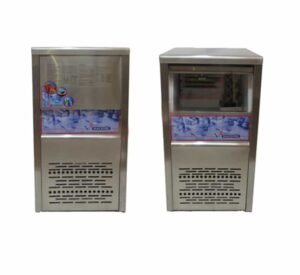
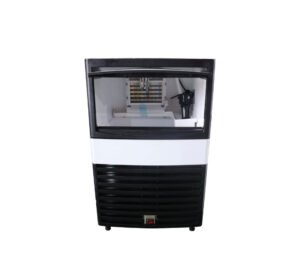
An Ice Maker 90kg/24h is a commercial ice-making machine advertised with a nominal production capacity of 90 kilograms within a 24-hour period under specified conditions. It is intended for businesses that require more ice than a small domestic ice maker can usually provide.
Commercial ice makers use a refrigeration system to freeze water and produce ice. Depending on the model, the machine may produce individual cubes or another specified ice shape. The exact ice type, production cycle, dimensions, electrical requirements, and storage arrangements depend on the particular product configuration.
The 90kg/24h rating is an important starting point when comparing commercial ice-making equipment. However, it should not be confused with the amount of ice the machine can hold at one time. Daily production capacity and storage-bin capacity are two different specifications.
For example, a machine rated at 90kg per 24 hours may produce ice throughout the day, while the quantity available for immediate use depends on its storage bin and how quickly staff remove the ice. If your business experiences sudden periods of high demand, you should consider both the machine’s production rate and the amount of ice that can be stored between production cycles.
Actual output may also vary according to the surrounding temperature, incoming water temperature, ventilation, installation conditions, and the manufacturer’s stated test conditions.
Benefits of Choosing an Ice Maker 90kg/24h
1. A Consistent Supply of Ice
Maintaining a dependable supply of ice is important for businesses that serve chilled drinks or require ice for food presentation. Running out of ice during lunch service, a busy evening, or a private function can disrupt normal operations and inconvenience customers.
An Ice Maker 90kg/24h can help businesses produce ice on-site instead of depending exclusively on external suppliers. When used correctly and planned around demand, the machine can support regular replenishment throughout the working day.
This can be especially useful for restaurants, bars, hotels, cafés, and catering operations where ice forms part of everyday service.
2. Suitable for Commercial Environments
Commercial ice-making equipment is designed for business applications rather than occasional household use. A machine with a stated 90kg daily production capacity may suit establishments with moderate to substantial ice requirements, depending on their customer numbers and service patterns.
Before purchasing, assess the actual volume of ice your business consumes. A café serving a limited selection of cold drinks may have different requirements from a busy restaurant, cocktail bar, or event catering company.
Matching capacity to demand helps prevent unnecessary expenditure while ensuring that your equipment can support your operations.
3. Greater Control Over Ice Availability
Producing ice on-site gives businesses more control over when ice is made and how it is replenished. Instead of coordinating every requirement around deliveries of bagged ice, staff can incorporate ice production into their daily preparation routine.
This approach can be particularly convenient for establishments with predictable operating hours and recurring demand. Staff can monitor available stock, follow a regular cleaning schedule, and plan production around expected service periods.
However, businesses should maintain a suitable backup plan for unusually busy periods, equipment downtime, or demand that exceeds normal production.
4. Support for Beverage Service
Ice is an essential ingredient in many cold beverages, including soft drinks, iced coffee, iced tea, fruit-based drinks, mocktails, and cocktails. Depending on the ice type produced by the selected model, an ice maker can help beverage stations prepare drinks more efficiently.
Having ice available near the service area may also reduce the need for staff to leave their stations to collect ice from a separate storage location.
For the best results, confirm that the ice shape and size are appropriate for your menu and the glasses or containers used by your business.
5. Improved Operational Planning
Businesses benefit when essential supplies are easier to plan and manage. A commercial ice maker provides an opportunity to establish a routine for production, storage, cleaning, and stock monitoring.
Managers can estimate average daily consumption, identify peak demand periods, and determine when the machine should be running. These practices can make ice management more predictable and help staff prepare for busy services.
The machine’s actual output should be monitored during normal operation so that purchasing decisions and production schedules are based on real-world performance rather than the advertised rating alone.
6. Potential Long-Term Convenience
For businesses that regularly purchase ice, making ice on-site may reduce some delivery and handling requirements. The financial benefit depends on the cost of purchased ice, water, electricity, cleaning supplies, maintenance, and any other operating expenses.
A careful cost comparison can help determine whether owning a commercial ice maker is financially suitable for your establishment.
Rather than focusing only on the purchase price, consider the total cost of ownership and the practical value of having ice production available on-site.
Ideal Applications for an Ice Maker 90kg/24h
The Ice Maker 90kg/24h can be considered for a variety of commercial applications, subject to the machine’s verified specifications and the user’s daily ice requirements.
Restaurants and Eateries
Restaurants use ice for chilled beverages, table service, drink stations, and certain food presentation requirements. A suitable commercial ice maker can help kitchens and front-of-house teams maintain access to ice during normal service.
Restaurant owners should estimate how much ice is used during lunch, dinner, weekends, and special promotions. Establishments with high drink sales may require additional storage or a larger production capacity.
Hotels and Guesthouses
Hotels and guesthouses may need ice for restaurants, bars, lounges, room-service operations, and guest entertainment areas. A commercial ice maker can support these activities when its production rate and location are appropriate.
Larger hotels may operate multiple beverage stations or require significantly more ice than a single 90kg/24h machine can produce. The correct solution depends on occupancy, service facilities, and the hotel’s operating schedule.
Bars and Cocktail Lounges
Bars frequently use ice to prepare mixed drinks, chilled beverages, cocktails, and mocktails. Reliable access to ice can help bartenders maintain an efficient service routine.
Before selecting an ice maker for a bar, confirm the ice type required for your drinks. Some cocktail applications benefit from particular cube sizes or shapes, so production capacity alone should not determine your choice.
Cafés and Coffee Shops
Cafés serving iced coffee, iced lattes, cold beverages, smoothies, and other chilled refreshments may benefit from producing ice on-site.
A suitable machine can support daily drink preparation and help staff plan replenishment during peak periods. Café owners should consider seasonal changes in demand, especially during warmer months when cold drinks may become more popular.
Catering Companies
Catering businesses need to manage changing requirements across different venues, event sizes, and service formats. Ice may be required for beverage stations, mobile bars, chilled refreshments, and appropriate food-display applications.
An on-site ice maker can support a catering preparation facility where ice is used regularly. However, event operators should not assume that a 90kg daily rating will cover every large function. Estimate the amount needed for each event and arrange additional ice when necessary.
For off-site events, also consider how the ice will be transported, protected from contamination, and kept frozen until use.
Event Venues and Conference Facilities
Conference centres, wedding venues, function halls, and entertainment facilities may use ice for bars, refreshments, and catered events. Demand can fluctuate substantially depending on the number of guests and the type of function.
An Ice Maker 90kg/24h may suit some smaller or medium-scale operations, but venues hosting multiple events or large gatherings should calculate peak consumption carefully.
Supermarkets and Food Retail Businesses
Food retailers may require ice for beverage service, certain food displays, or other approved applications. Before using an ice maker in a retail environment, verify that the equipment is suitable for the intended use and can be installed in a hygienic, accessible location.
Ice intended for consumption must be handled as food and protected from contamination throughout production, storage, and dispensing.
Offices and Staff Facilities
Large offices, staff canteens, shared dining facilities, and workplace hospitality areas may use ice for refreshments and employee catering. The suitability of a 90kg/24h machine depends on the number of people served and the frequency of use.
For smaller workplaces, a lower-capacity unit may be sufficient. For larger premises, assess daily consumption and storage requirements before making a decision.
Understanding the 90kg/24h Production Capacity
One of the most important considerations when purchasing an ice maker is understanding what the production rating means. Ice Maker 90kg/24h
A stated production capacity of 90kg/24h generally indicates that the machine is designed to produce up to approximately 90 kilograms of ice over 24 hours under the manufacturer’s specified test conditions. It does not necessarily mean the machine produces 90 kilograms in a single batch, nor does it mean all that ice can be stored inside the machine at once.
Several factors can influence actual production:
- Ambient temperature: Hot surroundings can affect refrigeration performance and may reduce ice output.
- Water temperature: Warmer incoming water can increase the time needed to freeze ice.
- Ventilation: Restricted airflow around the machine can affect heat removal and efficiency.
- Installation: Incorrect installation or unsuitable electrical and water connections may affect operation.
- Maintenance: Dirty filters, scale accumulation, or neglected components can interfere with performance.
- Operating conditions: Actual production may differ from laboratory or manufacturer test conditions.
If your business needs close to 90kg of ice every day, do not assume that the advertised maximum will always be achieved. Allow for operating conditions, demand fluctuations, and the possibility of downtime.
A practical approach is to estimate average daily consumption and peak-period requirements, then select a machine with an appropriate capacity margin.
Ice Production Versus Storage Capacity
Production capacity and storage capacity serve different purposes. Ice Maker 90kg/24h
Production capacity describes how much ice a machine can make over a particular period. Storage capacity describes how much ice can be held in the bin or container at one time.
This distinction matters because a business may consume ice in large quantities over a short period. A machine could have adequate daily production but insufficient storage to meet a sudden rush.
When evaluating the Ice Maker 90kg/24h, verify the following details on the specific product listing:
- The stated daily ice production.
- The storage-bin capacity, if included.
- Whether the storage bin is integrated or sold separately.
- The type and shape of ice produced.
- The recommended installation clearance.
- The water supply and drainage requirements.
- The electrical supply specifications.
If the machine does not include an integrated storage bin, determine whether a compatible bin is available and whether it fits your workspace.
Features to Check Before Purchasing
Commercial ice makers differ in design, construction, controls, and installation requirements. The following features should be checked against the actual product specification rather than assumed from the daily production rating.
Ice Type and Shape
Different businesses may prefer different ice shapes. Cubes, for example, are commonly used for general beverage service, while other shapes may suit specific dispensing or presentation requirements.
Check the exact ice type produced by the model and confirm that it meets the needs of your drinks menu or food service operation. Ice Maker 90kg/24h
Construction and Durability
Commercial equipment should be suitable for the environment in which it will operate. Review the manufacturer’s information regarding the cabinet material, internal components, corrosion resistance, and recommended cleaning methods.
If the machine will be used frequently in a busy kitchen or bar, consider the expected workload and the availability of maintenance support.
Controls and Operation
Review the control system and operating instructions to understand how the machine starts, produces ice, and signals any operating issues. Depending on the model, controls and alerts may vary.
Ask the supplier for the operating manual if you need information about cycle settings, indicators, or troubleshooting procedures. Ice Maker 90kg/24h
Water Supply and Drainage
Ice makers generally require a suitable water supply, and many commercial models also require drainage. Confirm the exact connection requirements before installation.
Where appropriate, consider water filtration to address local water quality issues. Filtration must be compatible with the equipment and maintained according to the manufacturer’s recommendations.
Ventilation and Placement
An ice maker should be positioned in a location that meets its ventilation, temperature, and clearance requirements. Avoid placing the machine where air inlets or outlets can become obstructed.
Check the dimensions and access requirements to ensure that the equipment fits comfortably within your kitchen, bar, or preparation area. Ice Maker 90kg/24h
Storage Arrangements
Determine whether the machine includes a storage bin or requires a separate compatible container. Consider how staff will access the ice and whether the storage arrangement supports hygienic handling.
Warranty and Technical Support
Before purchasing, confirm the warranty terms, service arrangements, spare-parts availability, and the supplier’s process for reporting equipment problems.
Access to suitable technical support can be important for businesses that depend on ice production every day.
Hygiene and Safe Ice Handling
Ice intended for consumption should be treated with the same care as food. Even when it looks clean, ice can become contaminated through contact with unclean hands, equipment, water, or storage surfaces. Ice Maker 90kg/24h
To support hygienic operation, establish a clear routine for cleaning and handling ice.
First, follow the manufacturer’s instructions for cleaning and sanitising the machine. Use only suitable products and procedures approved for the equipment and food-contact surfaces.
Second, ensure that staff wash their hands before handling ice and use a clean, dedicated ice scoop. The scoop should be stored in a hygienic location rather than left on an unclean surface or buried inside the ice.
Third, keep the storage bin closed or protected as designed. Avoid placing drinks, food packaging, hands, or unrelated utensils inside the ice bin.
Fourth, maintain the surrounding work area and promptly clean spills. Standing water and neglected surfaces can create hygiene and maintenance problems. Ice Maker 90kg/24h
Finally, follow applicable local food-safety requirements and any additional guidance provided by the manufacturer or relevant authorities.
Regular hygiene procedures help protect customers and support consistent standards in commercial food service.
Cleaning and Maintenance of an Ice Maker 90kg/24h
Regular maintenance can help preserve performance, maintain hygiene, and identify potential problems before they cause significant disruption. Ice Maker 90kg/24h
Follow the Manufacturer’s Cleaning Schedule
The correct cleaning frequency depends on the equipment design, water quality, usage, and operating environment. Follow the manual rather than applying an arbitrary schedule to every machine.
Clean and sanitise the machine using the specified process. Disconnect power and shut off water where required by the manufacturer’s instructions, and never expose electrical components to water.
Inspect the Water System
Water quality can influence ice quality and machine performance. Check the water supply, filters, and relevant components according to the maintenance instructions.
Replace filters at the recommended intervals and investigate unusual odours, visible contamination, or changes in ice quality. Ice Maker 90kg/24h
Keep Ventilation Areas Clear
Dust and debris can accumulate around ventilation openings and affect airflow. Inspect these areas regularly and clean them according to the manual.
Do not remove covers or attempt repairs that require technical training unless you are qualified and authorised to do so.
Monitor Ice Quality
Observe the appearance, smell, and consistency of the ice. Unexpected changes may indicate a water-quality issue, contamination, or an equipment problem. Ice Maker 90kg/24h
If contamination is suspected, stop using the affected ice, follow appropriate cleaning procedures, and seek professional assistance where necessary.
Arrange Professional Servicing
For commercial operations, planned servicing can help identify worn components, leaks, drainage problems, and refrigeration issues. Follow the manufacturer’s recommendations and use qualified technicians for repairs involving electrical or refrigeration systems. Ice Maker 90kg/24h
Keeping service records can also help businesses track recurring problems and plan maintenance expenditure.
Energy and Operating Costs
The purchase price is only one part of the total cost of operating an ice maker. Businesses should also consider electricity, water, filtration, cleaning products, maintenance, and any required storage equipment.
Electricity consumption depends on the specific machine, its rated power, the operating environment, and how frequently it runs. Check the manufacturer’s electrical specifications and, where available, its documented energy consumption.
Water consumption varies according to the machine’s design and operating cycle. If your business operates in an area where water is expensive or limited, water efficiency may be an important selection factor.
Good installation and maintenance practices can support efficient operation. Keep ventilation unobstructed, follow cleaning recommendations, repair leaks promptly, and avoid operating the machine outside its specified environmental conditions.
To compare costs accurately, consider the total amount of usable ice produced under your normal operating conditions rather than relying only on the advertised maximum capacity.
How to Choose the Right Ice Maker Capacity
Selecting the correct capacity begins with understanding how much ice your business uses. Ice Maker 90kg/24h
Start by estimating daily consumption. Consider the number of customers served, the types of beverages sold, the amount of ice used per drink, and any additional ice needed for catering or display purposes.
Next, identify peak demand. A business may use relatively little ice in the morning but experience a major increase during lunch, dinner, weekends, or special events.
Then assess storage needs. If your business consumes large quantities of ice in a short period, a larger storage bin or a separate reserve may be important.
Finally, allow for variable production. Hot weather, warmer water, and demanding operating conditions may reduce output compared with the advertised rating.
An Ice Maker 90kg/24h may be appropriate for a business whose estimated consumption fits comfortably within its practical production capability and storage arrangements. Businesses with greater demand may need a higher-capacity machine, multiple units, or an additional ice supply. Ice Maker 90kg/24h
Why Buy Commercial Ice-Making Equipment from Supreme Events and Catering Equipment?
Supreme Events and Catering Equipment serves customers looking for equipment for catering, hospitality, food preparation, and event operations. When selecting commercial ice-making equipment, businesses should consider not only the product price but also its suitability for the intended application.
Before ordering an Ice Maker 90kg/24h, review the product listing carefully to confirm the specifications, dimensions, production capacity, included accessories, installation requirements, and warranty conditions.
If any details are unclear, request confirmation before completing your purchase. This is particularly important for storage-bin capacity, electrical compatibility, water connections, drainage, and the type of ice produced. Ice Maker 90kg/24h
Choosing equipment that suits your actual requirements can help you make a more informed purchasing decision and plan for long-term use.
Frequently Asked Questions About the Ice Maker 90kg/24h
1. What does 90kg/24h mean?
It generally refers to a stated production capacity of up to 90 kilograms of ice over a 24-hour period under specified test conditions. Actual output can vary depending on the environment, water temperature, installation, and maintenance. Ice Maker 90kg/24h
2. Is the Ice Maker 90kg/24h suitable for restaurants?
It may be suitable for restaurants with compatible ice requirements. The right choice depends on customer numbers, beverage sales, peak demand, storage capacity, and the machine’s verified specifications.
3. Can this machine be used in a bar?
A commercial ice maker with this production rating may suit some bars and lounges. Confirm that the ice shape, production capacity, and storage arrangements match your beverage menu and busiest service periods. Ice Maker 90kg/24h
4. Does 90kg/24h mean the machine stores 90kg of ice?
No. Daily production and storage capacity are different measurements. Check the product specifications to establish how much ice the machine can hold at one time.
5. How often should an ice maker be cleaned?
Cleaning frequency depends on the manufacturer’s recommendations, water quality, usage, and applicable food-safety requirements. Follow the specified cleaning and sanitising schedule. Ice Maker 90kg/24h
6. Does an ice maker need a water connection?
Most commercial ice makers require a suitable water supply. Many models also need drainage. Confirm the requirements for the exact model before installation.
7. How can I maintain ice quality?
Use an appropriate water supply, maintain filters where fitted, clean and sanitise the machine regularly, keep the storage area protected, and handle ice with clean equipment. Ice Maker 90kg/24h
8. Is a 90kg ice maker suitable for large events?
It may support certain events, but suitability depends on guest numbers and total consumption. Large functions can use substantial quantities of ice within a short period, so calculate demand and arrange backup supplies when necessary.
9. What should I check before ordering?
Review the daily production rating, storage-bin capacity, ice type, machine dimensions, electrical requirements, water connections, drainage, ventilation, warranty, and service arrangements. Ice Maker 90kg/24h
10. Can actual production be lower than 90kg per day?
Yes. The advertised rating is generally based on specified conditions. High ambient temperatures, warmer water, restricted airflow, and maintenance issues can reduce actual production.
Conclusion: A Practical Ice-Making Solution for Commercial Businesses
The Ice Maker 90kg/24h is a commercial ice-making option for businesses that need a regular supply of ice for beverage service, hospitality, catering, and other suitable applications. Its stated daily production capacity can make it worth considering for restaurants, cafés, bars, hotels, event venues, and food service operations with compatible requirements. Ice Maker 90kg/24h
The key to choosing the right machine is to look beyond the production rating. Assess your daily ice consumption, peak demand, storage needs, installation conditions, water supply, and ongoing operating costs. Confirm the actual specifications of the model before purchasing, and follow the manufacturer’s instructions for installation, cleaning, and maintenance.
With suitable capacity planning and proper care, a commercial ice maker can help simplify ice management and support smoother day-to-day service. Ice Maker 90kg/24h
Explore the Ice Maker 90kg/24h and other commercial catering equipment options from Supreme Events and Catering Equipment to find equipment that matches your business needs. Selecting a machine based on verified specifications and realistic demand is an important step towards building a reliable and efficient food service operation. Ice Maker 90kg/24h


Reviews
There are no reviews yet.